
The Transcriptomic Smoking Gun: Study Linking mRNA Vaccines to Genomic Instability and "Turbo Cancer"
A collaboration by Neo7bioscience and The McCullough Foundation

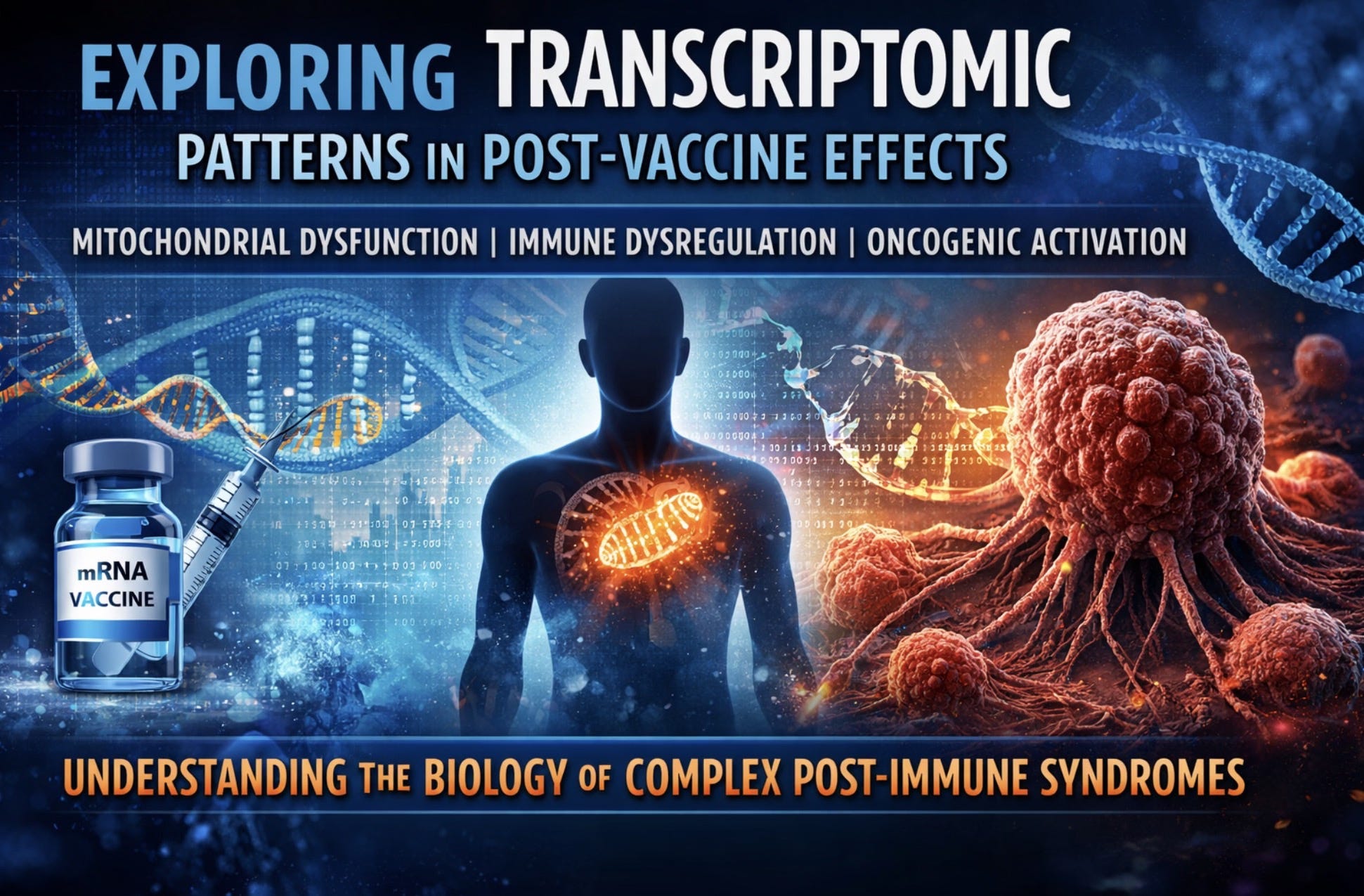
The Transcriptomic Fingerprint: Unveiling the Molecular Reality of Post-Vaccine Complications
A New Era of Precision Diagnostics in the Wake of mRNA Therapeutics
For years, the medical community has debated the long-term impact of synthetic messenger RNA (mRNA) platforms. While initially hailed for their rapid deployment, a subset of patients has experienced persistent, life-altering adverse events and new-onset malignancies. Until now, these cases were often treated symptomatically, leaving the underlying biological “why” unanswered.
A groundbreaking study published in World Journal of Experimental Medicine (PMC12767256) by researchers from Neo7Bioscience and the McCullough Foundation has finally pulled back the curtain. The findings are clear: the issue isn’t just “side effects”—it is widespread transcriptomic dysregulation.
The Discovery: A Body Out of Sync
Using bulk RNA sequencing, researchers analyzed blood samples from patients who developed nonmalignant adverse events or cancer following COVID-19 mRNA vaccination. What they found was a profound shift in the cellular “software” of these individuals.
The study identified several critical hallmarks of this dysregulation:
Mitochondrial Collapse: The cells’ energy factories were under siege, leading to systemic fatigue and cellular stress.
Transcriptomic Instability: The very process of reading and executing genetic instructions was compromised, specifically through “Nonsense-Mediated Decay” (NMD) and ribosomal stress.
Oncogenic Activation: In cancer patients, researchers observed the activation of the MYC oncogene—a powerful driver of tumor growth—alongside genomic instability and epigenetic reprogramming.
Immune Overdrive: Excessive signaling via Toll-like receptors and Type I interferons was prominent, suggesting a state of chronic, self-perpetuating inflammation.
From Blueprint to Battleground
The core of the study reveals that for susceptible individuals, the synthetic mRNA construct doesn’t just “deliver a message”—it may recalibrate the host’s molecular environment. This transcriptomic shift explains why “one-size-fits-all” treatments fail: the damage occurs at the deepest level of cellular communication.
The Neo7 Mission: Recalibrating the Code
At Neo7Bioscience, these findings aren’t just data points—they are a call to action. We believe that if the damage is transcriptomic, the solution must be personalized.
By utilizing our PBIMA® platform to map these exact dysregulations in an “N of 1” setting, we move beyond the symptoms. We analyze the specific RNA signatures identified in this research to architect individualized peptide therapeutics designed to:
1. Silence over-active oncogenic signaling.
2. Restore mitochondrial function.
3. Recalibrate the immune response.
The Future of Medical Sovereignty
The era of guessing is over. This study proves that the future of longevity and recovery is written in your genomics and expressed in your transcriptomics. By understanding the molecular signatures of post-vaccine injury, we are no longer fighting an invisible enemy. We are engineering the cure, one person at a time.
Key Takeaway for Professionals:
“The shared and distinct molecular signatures in these cohorts demonstrate the underlying mechanisms contributing to post-vaccine symptomatology. We are no longer looking at ‘side effects,’ but at a fundamental shift in the host’s transcriptomic architecture.”
Explore the Full Study on PMC | Learn More About Neo7 N-of-1 Solutions
Good term , mitochondrial collapse.👍🏼😞💔